
 EN



Smooth door operation is essential in any commercial or industrial facility, and the mechanism that makes this possible often goes unnoticed until problems arise. The continuous door hinge represents a critical engineering solution designed to provide consistent support along the entire length of a door frame, eliminating the stress concentration that traditional point-load hinges create. Understanding how a continuous door hinge maintains smooth door operation requires examining the mechanical principles that govern their design, the distribution of forces across their length, and the long-term benefits they deliver to facility managers and building owners.
The fundamental difference between a continuous door hinge and conventional hinges lies in how they support the door weight and handle repeated opening and closing cycles. A continuous door hinge distributes load uniformly across its entire length, whereas traditional hinges concentrate force at specific pivot points. This distribution mechanism is what enables continuous door hinge technology to maintain smoother operation over extended periods and significantly reduce maintenance demands on building systems.
Load Distribution and Structural Support
How Continuous Door Hinge Design Supports Weight Distribution
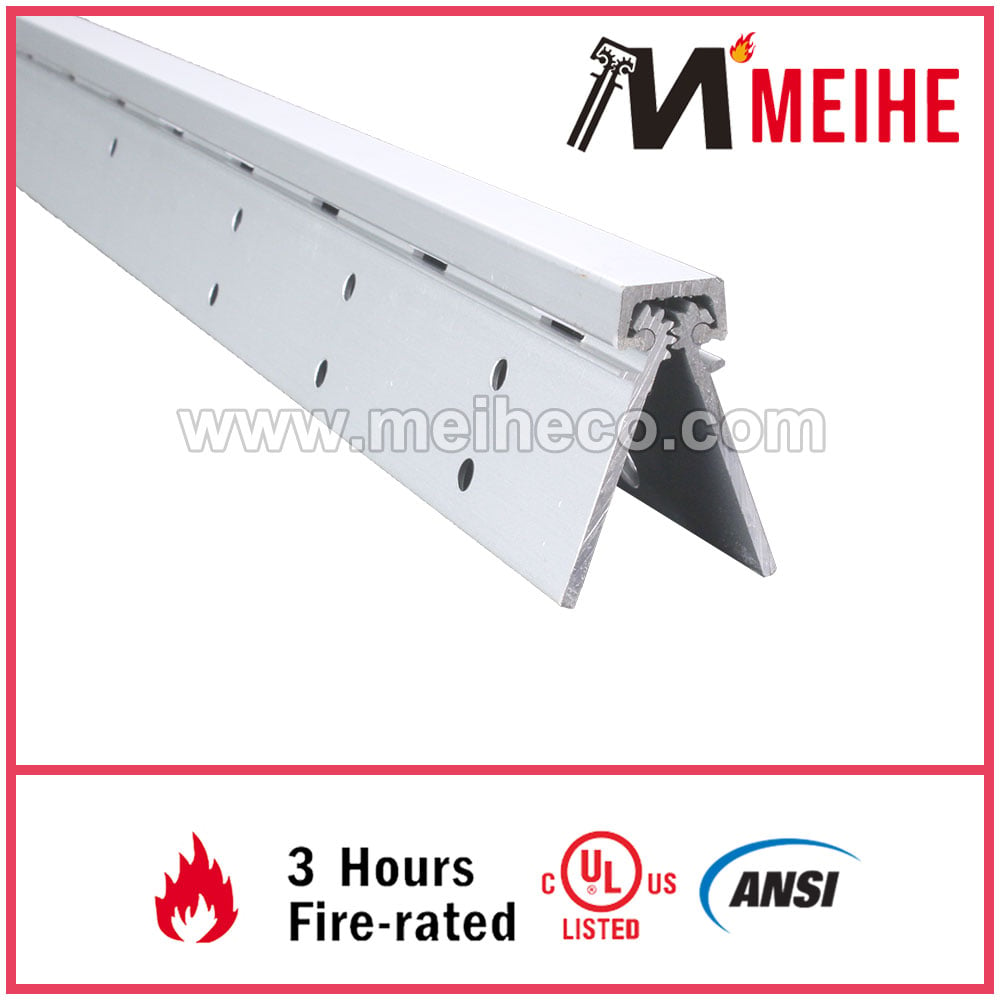
A continuous door hinge operates on a principle of distributed support that fundamentally differs from conventional hinges used in standard residential or light commercial applications. Rather than relying on two or three discrete pivot points to support the entire weight of a door, a continuous door hinge spans the full height of the door frame and distributes the load evenly across its entire length. This continuous support mechanism prevents the stress concentration that occurs when all weight and force concentrate at discrete pivot locations.
When a continuous door hinge supports a heavy door, the load transfers gradually and uniformly along the hinge barrel, reducing peak stress at any single point. This approach ensures that the continuous door hinge can accommodate heavier door panels than traditional hinges of comparable size, while simultaneously reducing the mechanical strain on the hinge components themselves. The result is a mechanism that maintains smooth door operation even under conditions of repeated heavy use, thermal expansion, and settling of building structures.
Impact on Door Alignment and Stability
Proper door alignment is one of the most critical factors in maintaining smooth door operation, and this is where a continuous door hinge excels compared to conventional alternatives. Because the continuous door hinge eliminates point-load stress concentration, the door frame experiences more uniform pressure distribution, which reduces the tendency for doors to sag, bind, or drift out of alignment over time. Heavy doors that might develop pronounced sag with traditional hinges remain properly aligned when supported by a continuous door hinge throughout their operational life.
The vertical alignment stability provided by a continuous door hinge directly translates to consistent gap spacing and reduced friction between the door and the frame. When doors remain properly aligned, they require less effort to operate, move more smoothly, and are less likely to stick or require frequent adjustment. Facilities that upgrade to continuous door hinge systems often report immediate improvements in door ease of operation and a significant reduction in alignment-related maintenance calls.
Durability and Long-Term Performance Characteristics
Wear Resistance and Component Longevity
The wear patterns that develop in traditional hinges are highly localized around the pivot points, where stress concentration accelerates material fatigue and surface degradation. A continuous door hinge distributes this wear across its entire length, which dramatically extends the service life of all hinge components. The larger contact area and more gradual stress transitions mean that bearing surfaces experience lower stress levels and wear at significantly reduced rates compared to conventional hinges.
Manufacturing specifications for a continuous door hinge typically include high-strength materials chosen to withstand the mechanical demands of extended heavy-duty use. The continuous nature of the hinge barrel means that any single spot on the bearing surface experiences only a fraction of the total load, compared to the concentrated forces that traditional hinges endure. This fundamental difference results in a continuous door hinge that can operate reliably for years or even decades with minimal maintenance, whereas conventional hinges may require replacement or significant maintenance within a few years of installation.
Thermal and Environmental Stability
Environmental factors including temperature fluctuations, moisture exposure, and thermal cycling can accelerate wear in traditional hinge systems, but a continuous door hinge demonstrates superior resistance to these environmental stressors. The distributed load profile of a continuous door hinge means that thermal expansion and contraction occur more gradually and uniformly along the entire hinge length, reducing the stress concentrations that lead to cracking or deformation. Industrial facilities, warehouses, and buildings with significant temperature variations benefit greatly from the environmental stability that only a continuous door hinge can provide.
The materials used in quality continuous door hinge systems are typically selected and finished to resist corrosion and environmental degradation. When a continuous door hinge is properly specified for its application environment, it maintains consistent performance across seasons, humidity levels, and temperature ranges that would challenge traditional hinges. This environmental resilience makes the continuous door hinge an ideal choice for facilities where doors must perform reliably under challenging conditions.
Operational Smoothness and User Experience
Reducing Friction and Binding Issues
One of the most noticeable benefits that building occupants experience is the dramatically smoother operation provided by a continuous door hinge compared to traditional alternatives. Because the continuous door hinge maintains precise door alignment and distributes support evenly, friction between the door and frame remains minimal even after years of use. Users consistently report that doors equipped with a continuous door hinge require less physical effort to open, close, and position, which is particularly valuable in high-traffic facilities where dozens or hundreds of people use doors daily.
Binding, sticking, and resistance that commonly develop in doors supported by traditional hinges are virtually eliminated when those doors are upgraded to a continuous door hinge system. The superior load distribution prevents the frame distortion that causes binding, while the reduced wear maintains clearances at their optimal specifications. Facilities managers value this consistency because smooth door operation reduces user frustration, minimizes damage risk, and creates a more professional environment for building occupants and visitors.
Noise Reduction and Operational Comfort
Squeaking, creaking, and other noise issues that develop in traditional hinges as they wear are directly related to the stress concentration and resulting micro-movements that occur at pivot points. A continuous door hinge virtually eliminates these noise problems because the distributed load prevents the mechanical stress that generates sound. High-traffic facilities, healthcare environments, educational institutions, and other settings where noise control matters find that upgrading to a continuous door hinge creates noticeably quieter door operation.
The mechanical stability and precise alignment maintained by a continuous door hinge means that doors move smoothly and quietly with minimal vibration or rattling. This operational smoothness contributes to a more professional and pleasant facility environment. Additionally, the reduced mechanical stress on all components means that a continuous door hinge system is less likely to develop the loose connections and minor defects that generate noise in aging traditional hinge systems.
FAQ
What specific advantages does a continuous door hinge provide over traditional hinges in high-traffic facilities?
A continuous door hinge provides several advantages in high-traffic facilities, including more even weight distribution that prevents sagging, reduced maintenance requirements, smoother and quieter operation, and significantly extended service life. The continuous door hinge system eliminates the point-load stress that causes traditional hinges to wear quickly and develop binding issues. Facilities operators report that upgrading to a continuous door hinge reduces maintenance costs, improves user experience, and minimizes downtime due to hinge-related door problems in high-traffic environments.
How does a continuous door hinge help maintain door alignment over time?
A continuous door hinge supports the entire door weight uniformly along its full length rather than concentrating load at discrete pivot points. This distributed support prevents the frame stress that causes sagging and misalignment, keeping doors properly positioned and maintaining consistent gaps between the door and frame. By preventing the stress-induced distortion that occurs with traditional hinges, a continuous door hinge ensures that doors remain aligned and operate smoothly for years without adjustment, even under conditions of repeated heavy use.
Can a continuous door hinge reduce operational costs and maintenance expenses?
Yes, a continuous door hinge significantly reduces operational and maintenance costs by extending service life, minimizing the need for adjustments, and reducing wear-related failures. Traditional hinges often require replacement or major maintenance every few years, but a continuous door hinge system can operate for decades with minimal care. Facilities save money through reduced labor costs, fewer replacement cycles, improved energy efficiency from better sealing due to maintained alignment, and decreased downtime from door-related issues.