
 EN



Heavy doors present unique operational challenges across industrial, commercial, and institutional facilities. Standard pivot hinges and barrel hinges often fail prematurely under constant use, requiring frequent repairs and replacement that disrupt operations and inflate maintenance budgets. The continuous door hinge represents a fundamental shift in how facilities managers approach door durability and maintenance strategy. This specialized hinge type distributes weight and stress across its entire length rather than concentrating force at discrete pivot points, fundamentally changing the maintenance equation for heavy-duty applications.
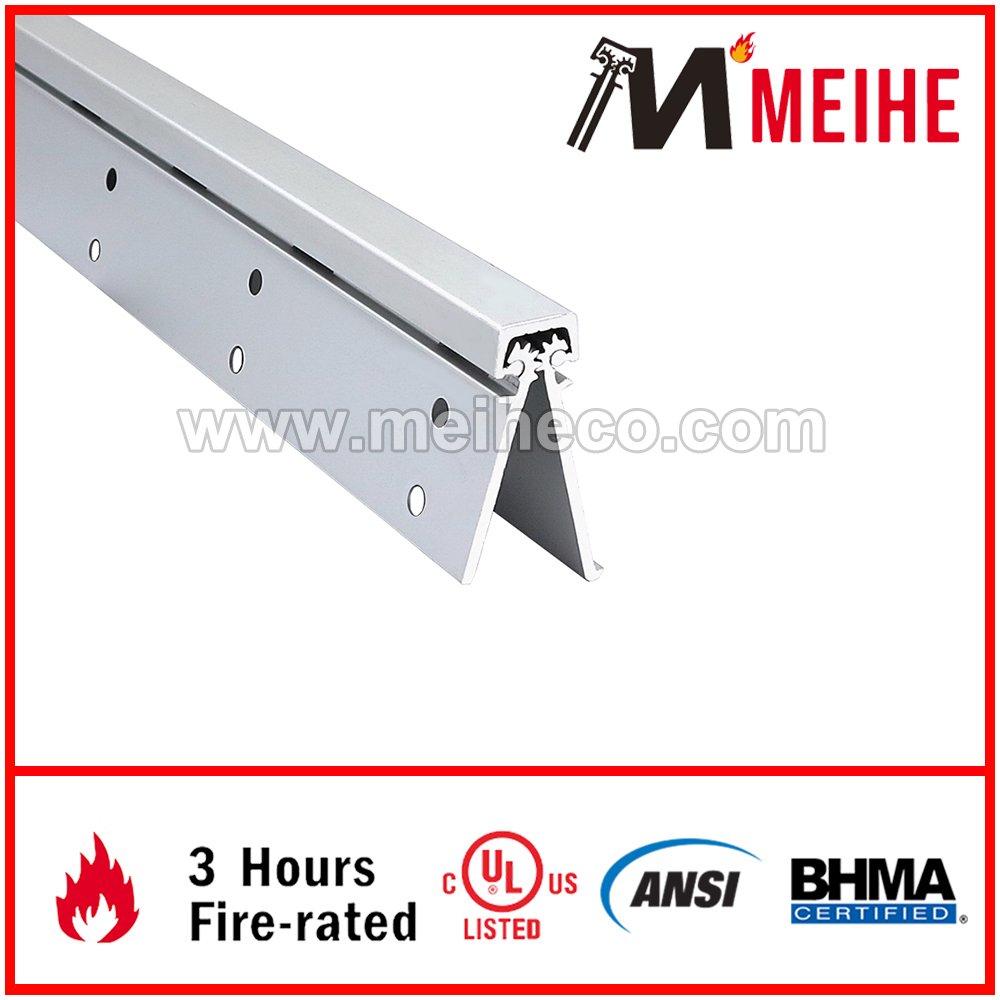
The continuous door hinge has become increasingly prevalent in facilities where door reliability directly impacts safety, security, and operational efficiency. Unlike traditional hinge designs that concentrate mechanical stress at specific bearing points, a continuous door hinge runs the full height of the door, creating distributed load bearing that dramatically extends component lifespan. This design philosophy has proven especially valuable for facilities operators seeking to reduce unplanned downtime, lower total cost of ownership, and maintain consistent door performance over extended periods.
How Continuous Door Hinge Design Reduces Maintenance Burden
Distributed Load Bearing in Continuous Door Hinge Systems
The primary maintenance advantage of a continuous door hinge stems from how it fundamentally redistributes mechanical forces. Traditional barrel hinges concentrate all door weight at two or three discrete bearing points, creating extreme localized stress that accelerates wear and component degradation. A continuous door hinge extends bearing surface across the entire door height, spreading load distribution evenly along the full hinge length. This design characteristic means no single point experiences the concentrated stress that causes accelerated wear, binding, or premature failure in standard hinge configurations.
When heavy doors open and close thousands of times annually, the cumulative stress on traditional hinges compounds rapidly. A continuous door hinge absorbs this repeated stress across distributed contact surfaces, substantially reducing the wear rate on any individual bearing element. Facilities using continuous door hinges report significantly fewer instances of hinge binding, sticking, or noise development compared to facilities still relying on traditional designs. This distributed stress approach directly translates to extended service intervals and fewer emergency maintenance calls.
Elimination of Wear Concentration Points
Standard hinges develop maintenance problems because they create wear concentration points where stress intensifies over time. These predictable failure zones require managers to anticipate replacement before catastrophic failure occurs, adding uncertainty to maintenance planning. A continuous door hinge eliminates these vulnerable stress concentration points by design, creating more uniform wear patterns across the entire hinge structure. This uniform degradation pattern makes maintenance more predictable and allows facilities to extend replacement intervals more confidently.
The absence of high-stress concentration points in a continuous door hinge also reduces the likelihood of sudden, catastrophic failure. Heavy doors equipped with traditional hinges sometimes fail unexpectedly when concentrated stress exceeds bearing capacity at weak points. With a continuous door hinge, degradation occurs gradually and uniformly across the entire hinge length, providing earlier warning signs and allowing planned maintenance rather than emergency replacement. This predictability transforms maintenance from reactive crisis management into proactive scheduled service.
Maintenance Cost Reduction and Operational Benefits
Extended Service Intervals for Continuous Door Hinge Applications
Facilities implementing continuous door hinge technology consistently report extended maintenance intervals compared to standard hinge installations. Where traditional heavy-duty hinges require service or replacement every 18 to 24 months, a continuous door hinge often remains operational for 36 to 48 months or longer with minimal intervention. This extended operational lifespan directly reduces the frequency of maintenance events, lowering labor costs, parts inventory requirements, and associated facility disruption. For facilities operating 24/7 or maintaining strict production schedules, minimizing maintenance events provides substantial competitive advantage.
The extended service intervals associated with a continuous door hinge also simplify maintenance planning and budgeting. Facilities can schedule hinge maintenance less frequently, reducing the administrative overhead of coordinating service calls and managing replacement inventory. This predictability allows maintenance teams to plan work during scheduled downtime windows rather than responding to unexpected failures. Over a five-year period, the reduced frequency of maintenance events for a continuous door hinge can reduce total maintenance labor costs by 40 to 60 percent compared to traditional hinge configurations.
Reduced Parts Replacement and Inventory Management
Heavy-duty operations maintaining multiple doors equipped with traditional hinges must stock substantial hinge inventory to address failures quickly. A continuous door hinge reduces the replacement frequency so significantly that inventory management becomes substantially simpler. Facilities report maintaining 50 to 70 percent smaller hinge inventories after transitioning to continuous door hinge systems, freeing capital previously tied up in spare parts storage. This inventory reduction also eliminates waste from parts becoming obsolete or deteriorating in storage before use.
The economic impact of reduced replacement frequency extends beyond spare parts inventory. Each maintenance event for a continuous door hinge requires less technician time because the hinge requires less frequent attention. Over the operational life of a heavy door, the cumulative labor savings from fewer maintenance events can exceed the initial premium cost of installing a continuous door hinge system. Facilities in manufacturing, healthcare, hospitality, and secure access sectors have documented total cost of ownership reductions of 35 to 50 percent after switching to continuous door hinge technology.
Performance Consistency and Safety Advantages
Maintaining Operational Performance Over Extended Service Life
Traditional hinges exhibit degrading performance characteristics as they age, often developing squeaks, resistance, or inconsistent closing behavior before failure occurs. A continuous door hinge maintains consistent operational performance throughout its service life because stress is evenly distributed and wear is uniform. Doors equipped with a continuous door hinge operate smoothly on the final day of the hinge's life exactly as they did on the first day, providing reliable performance and predictable operation. This performance consistency eliminates the gradual degradation that characterizes aging traditional hinges.
The consistent performance of a continuous door hinge also improves safety outcomes in facilities where door reliability impacts security or emergency response. Fire-rated doors, security access points, and emergency egress doors must operate reliably under all conditions. A continuous door hinge maintains smooth operation and consistent closing force throughout its service life, ensuring these critical doors function as designed even after extended use. This reliability is particularly valuable in healthcare facilities, manufacturing plants, and secure facilities where door failure can compromise safety protocols.
Reduced Environmental and Operational Disruption
Emergency hinge failures cause operational disruptions that extend far beyond the simple cost of replacement parts. Manufacturing facilities might experience production delays, hospitals might experience access control compromises, and hospitality venues might experience guest service disruptions. A continuous door hinge dramatically reduces the likelihood of emergency failure by extending service life and providing predictable degradation patterns. Facilities can schedule hinge replacement during planned maintenance windows rather than responding to unexpected failures during critical operational periods.
The reduced maintenance frequency and improved reliability of a continuous door hinge also contribute to environmental sustainability goals. Fewer replacement parts means less manufacturing waste and reduced material consumption over time. The extended lifespan of a continuous door hinge reduces the total number of hinges manufactured and installed across a facility's operational period. For organizations with environmental responsibility commitments, this material reduction provides measurable sustainability benefits beyond the operational and financial advantages.
FAQ
How much longer does a continuous door hinge typically last compared to standard hinges?
A continuous door hinge typically lasts 50 to 100 percent longer than standard barrel or pivot hinges on heavy doors. While traditional hinges might require replacement every 18 to 24 months in heavy-use applications, a continuous door hinge often operates reliably for 36 to 48 months or longer. The exact lifespan difference depends on usage frequency, door weight, environmental conditions, and installation quality. Facilities that have measured actual performance report consistent lifespan extensions of 24 to 36 additional months per continuous door hinge installation compared to previous standard hinge configurations.
Do continuous door hinges require specialized installation or maintenance procedures?
A continuous door hinge requires proper initial installation to achieve its full maintenance reduction benefits, but ongoing maintenance procedures are typically simpler than traditional hinges. Installation must ensure the hinge is securely mounted across its entire length and properly aligned with the door and frame. Once installed correctly, a continuous door hinge requires minimal maintenance beyond occasional lubrication at specified intervals. Many facilities find that standard maintenance staff can perform lubrication and minor adjustments without specialized training, making routine care straightforward compared to traditional hinge systems.
Are continuous door hinges suitable for all types of heavy doors?
A continuous door hinge works effectively for most heavy-duty door applications, including hollow metal doors, solid core doors, and specialized security doors. However, suitability depends on factors including door weight, door height, opening frequency, and specific application requirements. Fire-rated doors, emergency egress doors, and security-critical doors are particularly good candidates for continuous door hinge installations because the extended reliability and consistent performance provide additional safety benefits. Facility managers should verify that selected continuous door hinge specifications match their specific door configuration and usage patterns to maximize maintenance reduction benefits.